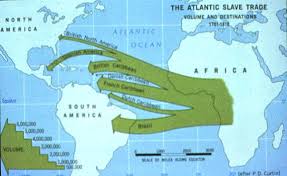
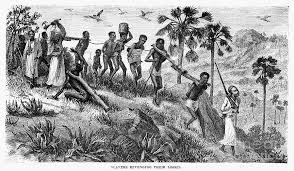
The picture shown above is a map of the African Atlantic slave trade. The slave trade was when people of other ethnicity’s would come into Africa and take Africans as slaves and move them to different parts of the world. African Diaspora is the spreading or scattering of Africans and African descendants worldwide. We will continue to talk about what African people and descendants went through and continues to go through to this day.
Below is a link to a timeline that was done in class about The Atlantic Slave Age. The information came from Africa’s Great Civilizations video 5. The video link is also provided below
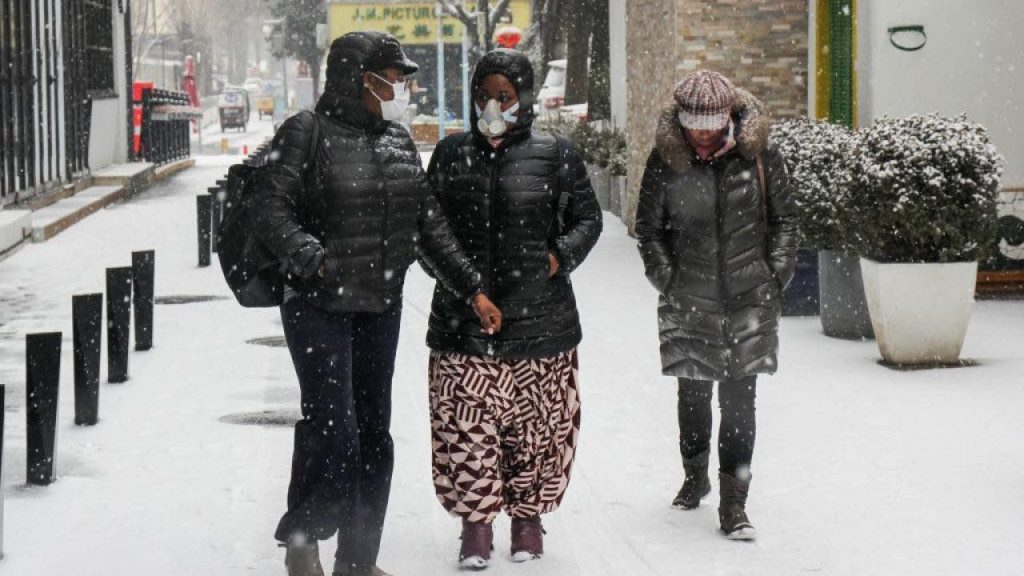
Coronavirus has affected everyone around the world! But is it affecting our people, black Americans more than any other race in the world. I have found an article that shows different statistics on where and how this virus is affect black Americans worldwide. Below will be a link to me explaining what I think about the article that was posted on my FaceBook.
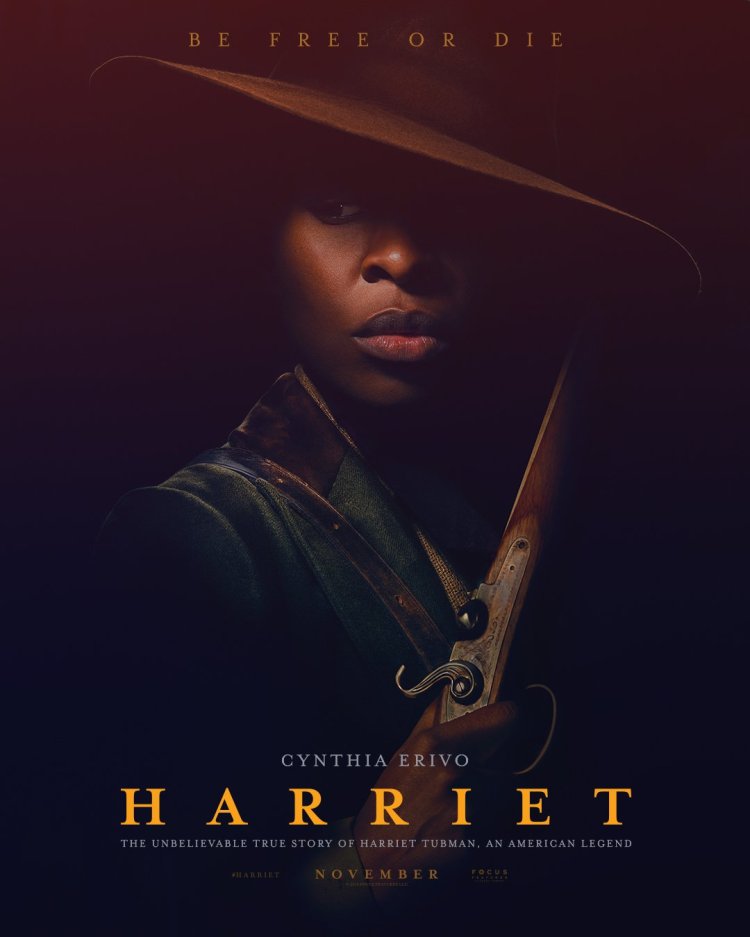
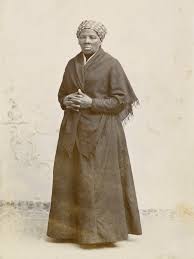
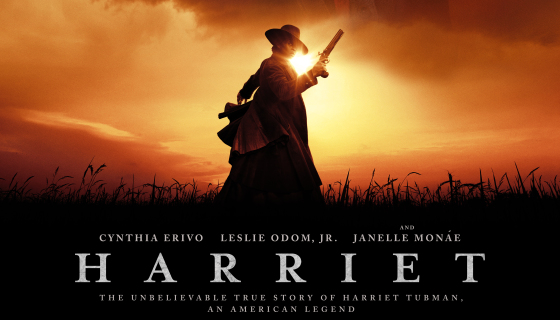
Harriet Tubman, a women born into slavery dedicated her life to helping other slaves escape and become free. Harriet would risk her life time and time again to get families and others to safe houses up north. This was her passion, once she escaped successfully the first time she did not have to go back to help others but she did so others would not have to endure the hardships of slavery anymore. I have always admired what she did because I am not sure if I could keep putting my life in danger for others time after time during this terrible time for black people. Im sure she was scared or nervous every time she went on her missions but she did not let that stop her. A movie recently about her life came out called “Harriet”, showing how brave she was helping these people. The movie did really good in theaters which is so important, to support a black cast and movie but to also show what she and many others endured during this horrible time.
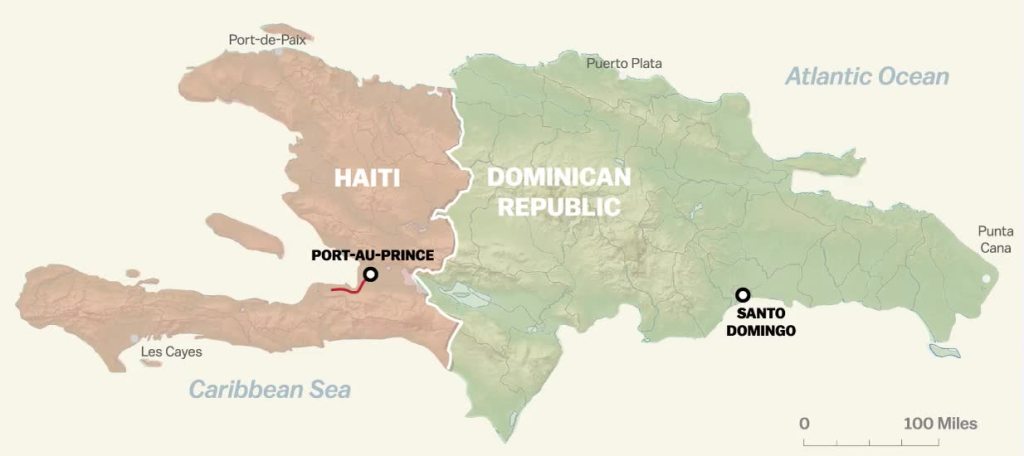
Seeing two beautiful countries that are only separated by a river, you would think they would have many similarities. But in reality these two countries are very different. After watching “Black In Latin America: Haiti and Dominican Republic”, I learned the history of each country. Haiti and the Dominican Republic has shared the island of Hispanola for over five century’s. The river that separates Haiti and the Dominican Republic is called Massacre River. On the Dominican republic side they speak mainly spanish and is one hour ahead of Haiti. On Haiti’s side they speak Creole. Santo Domingo(oldest European city in the new world) is the capital of the Dominican Republic. DR was founded in 1496 by Christopher Columbus older brother Bartholomew. This city was the first seat of Spanish colonial rule in all the Americas.
Dominican Republic was the first place in the new world to import Africans as slaves. People who are from Dominican Republic do not consider themselves black, they use the term Indio for people of darker skin color. When they think of the motherland they think of Spain not Africa. On Feb 27,1844 the DR was independent for the first time. They were not declaring freedom from Spain but from Haiti. Haiti being founded in 1804 by former French slaves occupied Santo Dominican for 20 years. The Haitian government that was in charge at the time would tax the people and institutions of the DR. This angered them so once they were free they did everything they could to reject everything about Haiti. In the the early 20th century the Haitians came back not as soldiers this time but as desperate migrant workers. Most came back in 1916 during the United States occupation. DR was one of the first places to have sugar plantations but that did not last very long. Shortly after the collapsing of the sugar industry they turned to cattle ranching. This caused many whites to leave forcing the blacks to take over the ranks of the Army, church, and bureaucracy. Plantation work dehumanized Haitian workers. This is when the Dominicans started seeing themselves as superior to the Haitians. Between 1930-1961, General Rafael Leonidas Trujillo used an anti-Haitian racism to help forge a strong state after years of political chaos. He did everything in his power to claim DR as a white nation despite the fact that he had Haitian ancestry. In Oct 1937 he issued an order for his troops to kill all the Haitians in the northwest part of the country. When the troops arrived they closed down the border even as the Haitians fled across the massacre river the troops brutally slaughtered them, leaving about 15,000 Haitians dead. Trujillo never fully succeeded in entirely eliminating the Haitians. There are more than a million that still live and work there that still causes tension.
In the capital of Haiti (Port- Au-Prince) an earthquake hit in 2010 that killed over 220,000 people and left over 1.5 million people homeless in tents with no running water, electricity, or sanitation. But long before the earthquake the country of Haiti was the poorest on the western hemisphere. Cap-Haitians, Haitis historic second city, formally known as Cap-Francais was the first permanent french settlement on Hispaniola. The island was formally divided in 1697, Cap-Haitien became the commercial hub for the french side. It was the main port for the entry of the growing trade in African Slaves. 774,000 Africans came to Haiti from the slave trade. 300,000 of them then went to the United States. Haiti was the reason for the fabulous wealth that was sugar. By the 1700 the colony nearly produced half the worlds sugar and generated 2/5ths of Frances overseas trade. Haiti inherited everything Africa had to offer. Most Haitians are officially Roman Catholic but many Haitians combine with their Catholicism an African based faith called Vodou. Vodou is a complex belief system, a religion as sophisticated as any other religion. On Aug 14,1791, a Vodou ceremony was held to celebrate slavery being over when the Haitians overthrew the french. The Bois Cayman upraising was the beginning of the greatest slave revolt ever seen in the history of the new world. It only took the slaves two years to win freedom. During this time Haiti was ran by General Toussaint Louventure. Haiti was still a French colony but free of slavery. But in 1802, the French under Napoleon Bonaparte reversed the Emancipation of the slaves. Toussaint had been tricked and arrested, then sent to a French prison where he died in exile. The Haitians rose up again stoping the French from reimposing slavery. Jean-Jacques Dessalines declared independence on Jan 1,1804. Dessalines then order a massacre of the French people on the island. Two years later he was assassinated by the generals who helped him defeat the French. Anything that had to do with slavery was destroyed even the good things like importing with other countries. Haiti had to pay the French more than 1 billion dollars between 1825-1947 for the reparations causing bankruptcy in its treasury.
On July 28,1915 the United States Marines landed in Port-Au-Prince just as they would do in the Dominican Republic a year later to protect America and foreign interests to ensure that Haiti had paid its debt to America and France. For the next 19 years the U.S wielded an absolute veto over all government decisions while the provinces came under rule of the Marine commanders. Haiti was never really given the chance to to develop as and independent nation. The country also suffered from many brutal and corrupt despotic leaders. President from 1957 to his death in 1971, President Duvalier was possibly Haiti’s most despotic ruler stole millions of dollars in foreign aid, while his private militia The Tonton Macoutes oversaw a reign of terror. The American government backed the DR dictator General Trujillo because he was a loyal ally against communism. Haiti is still waiting for most of the $ 10 billion pledge in aid. Ironically, after the earthquake it was the Dominicans who were the first on the scene providing aid and support.
Here is an up to date news article about Haiti’s protest that ended in police gunfire. The preparation for Carnival was interrupted by shot being fired in Haiti’s capital as the officers protested the government. A question I have is will Haiti ever get to a point when they are normal up and running.
From Holloway’s “What Africa Has Given America” we will look at the importance Africa plays in the world. Five important things I got from reading is that African cultural patterns are clearly seen predominately in the Southern states shows how much of an influence Africa had on the United States still to this day. Second, Africans are so smart and handy that certain ethnic groups from the Kongo/Angola region had a big reputation for being able to pick up different mechanical skills. This shows that even though people considered slaves less than or stupid they were actually very gifted and skilled not only in mechanical work but in all other aspects too. Third, A lot of crops that were sold in America were grown in Africa this includes rice, okra, black-eyed peas, and more. Fourth, many African dances were brought over and reshaped by Europeans. And lastly Africans were medically knowledge of both old and new diseases that crossed the Atlantic Ocean and helped the Americans when sick. I really enjoyed reading this because even though I did know somethings that were stated, I did not know everything so it was definitely a good learning experience. I believe everyone should read this to learn about just how much Africa did for America and how a lot of the things America has today would not be possible without the help of Africa. One question I have still is why people still continue to belittle African people and people of African descendant if there is so much evidence of what we did for the world.
This is an example post, originally published as part of Blogging University. Enroll in one of our ten programs, and start your blog right.
You’re going to publish a post today. Don’t worry about how your blog looks. Don’t worry if you haven’t given it a name yet, or you’re feeling overwhelmed. Just click the “New Post” button, and tell us why you’re here.
Why do this?
Because it gives new readers context. What are you about? Why should they read your blog?
Because it will help you focus you own ideas about your blog and what you’d like to do with it.
The post can be short or long, a personal intro to your life or a bloggy mission statement, a manifesto for the future or a simple outline of your the types of things you hope to publish.
To help you get started, here are a few questions:
Why are you blogging publicly, rather than keeping a personal journal?
What topics do you think you’ll write about?
Who would you love to connect with via your blog?
If you blog successfully throughout the next year, what would you hope to have accomplished?
You’re not locked into any of this; one of the wonderful things about blogs is how they constantly evolve as we learn, grow, and interact with one another — but it’s good to know where and why you started, and articulating your goals may just give you a few other post ideas.
Can’t think how to get started? Just write the first thing that pops into your head. Anne Lamott, author of a book on writing we love, says that you need to give yourself permission to write a “crappy first draft”. Anne makes a great point — just start writing, and worry about editing it later.
When you’re ready to publish, give your post three to five tags that describe your blog’s focus — writing, photography, fiction, parenting, food, cars, movies, sports, whatever. These tags will help others who care about your topics find you in the Reader. Make sure one of the tags is “zerotohero,” so other new bloggers can find you, too.


 Mariah Kahmari